There’s a lot happening under one roof at Midtown Market, and six new duckpin lanes put bowling right in the middle of it.
The 30,000-square-foot family entertainment center and community marketplace in Cambridge, Ohio brings together food, arcade games, an indoor play area, gathering space, and recreation in a renovated downtown property. Funk installed six duckpin lanes with Nexus scoring and on-lane projection, adding an arcade bowling experience that feels right at home in the mix.
Bowling Inside a Multi-Use Destination
Midtown Market combines food vendors, arcade games, an indoor play area, party space, seating, and other community-focused uses inside a renovated downtown property. The bowling area occupies one part of that larger mix.
That matters because people don’t always visit a family entertainment center with the same plan. One group may come primarily to eat. Another may be there for a birthday. Parents and kids may want completely different activities. Combining arcade bowling with other attractions gives groups more ways to spend their time within the same venue.
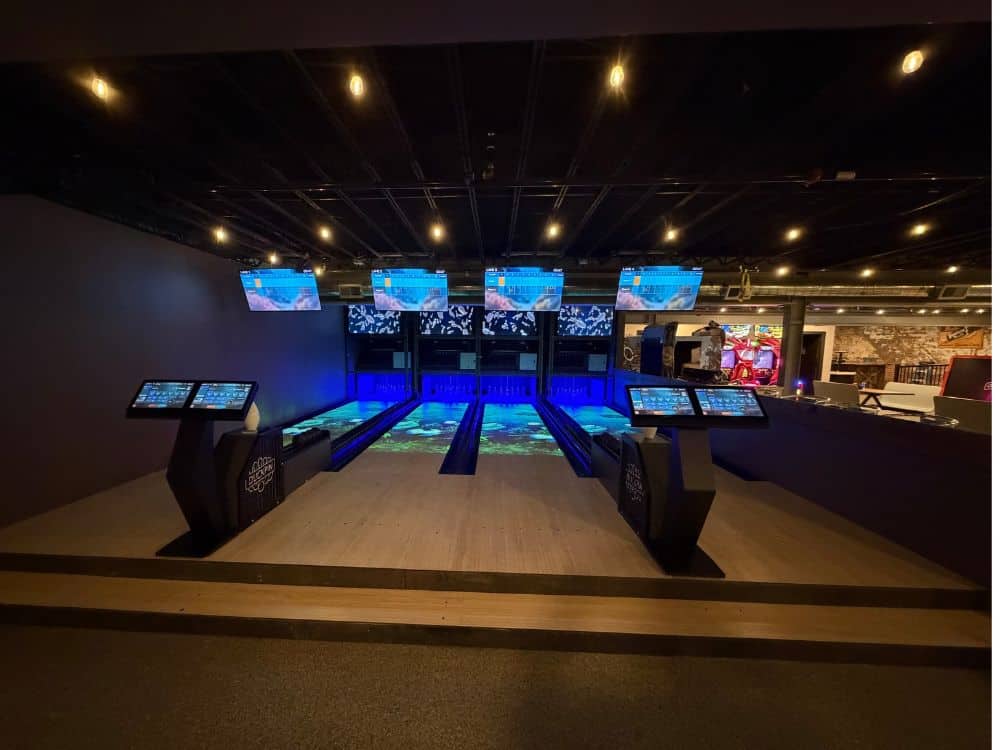
Six duckpin lanes give Midtown Market enough capacity for several groups to play at once without requiring the footprint of a traditional bowling center.
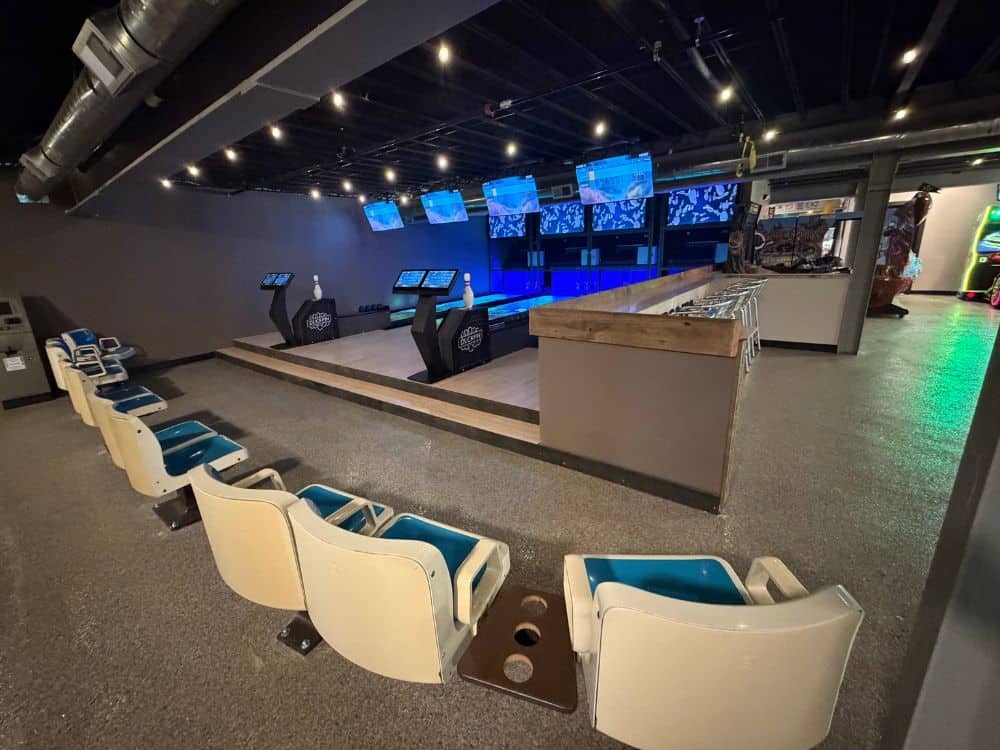
The setup also keeps bowling connected to the rest of the venue. Guests can sit nearby and watch a game, move between bowling and other activities, or make the lanes the main activity for their visit.
Arcade Bowling Built for Casual Play
Duckpin makes sense in a setting like this because it doesn’t ask much of a first-time player.
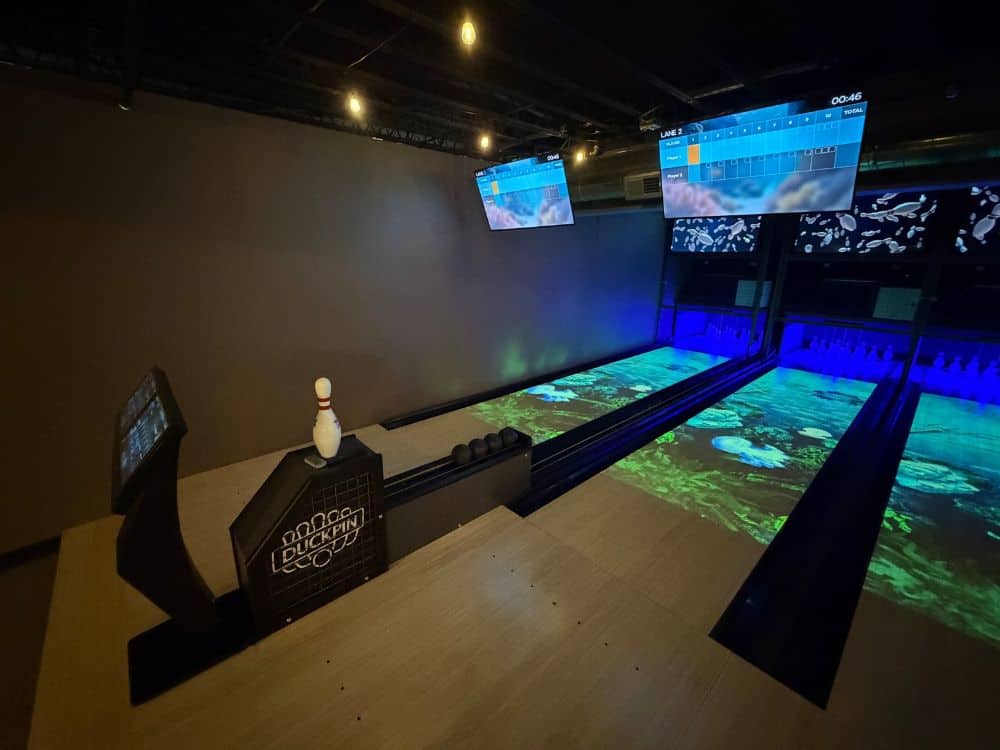
The balls are smaller than traditional tenpin bowling balls and don’t require finger holes. Guests don’t need rental shoes, either. Someone can walk over from the arcade or food area and start playing without turning it into a whole production.
That makes arcade bowling particularly useful in a family entertainment center where bowling is one activity among several.
A family can play a quick game after eating. A birthday group can rotate between bowling and the arcade. Adults and kids can share a lane even if some of them rarely bowl.
The goal isn’t to make guests choose bowling over everything else in the building. It’s to make bowling easy to add to whatever brought them there in the first place.
Nexus Brings the Game Onto the Lane
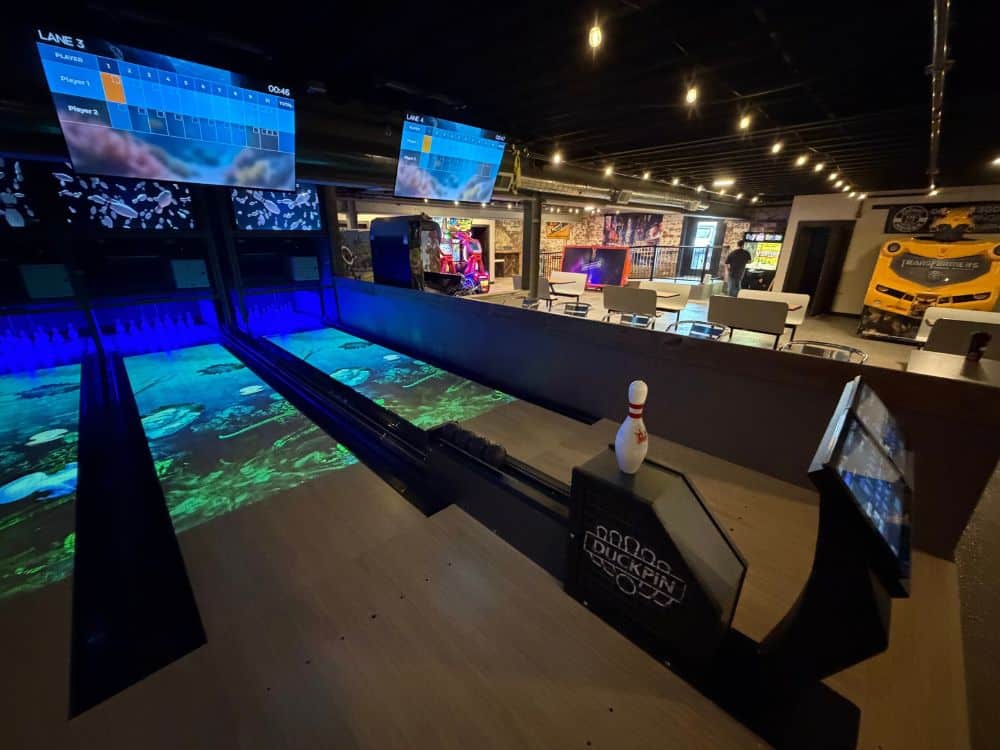
The six Midtown Market lanes also use Funk Nexus scoring with on-lane projection.
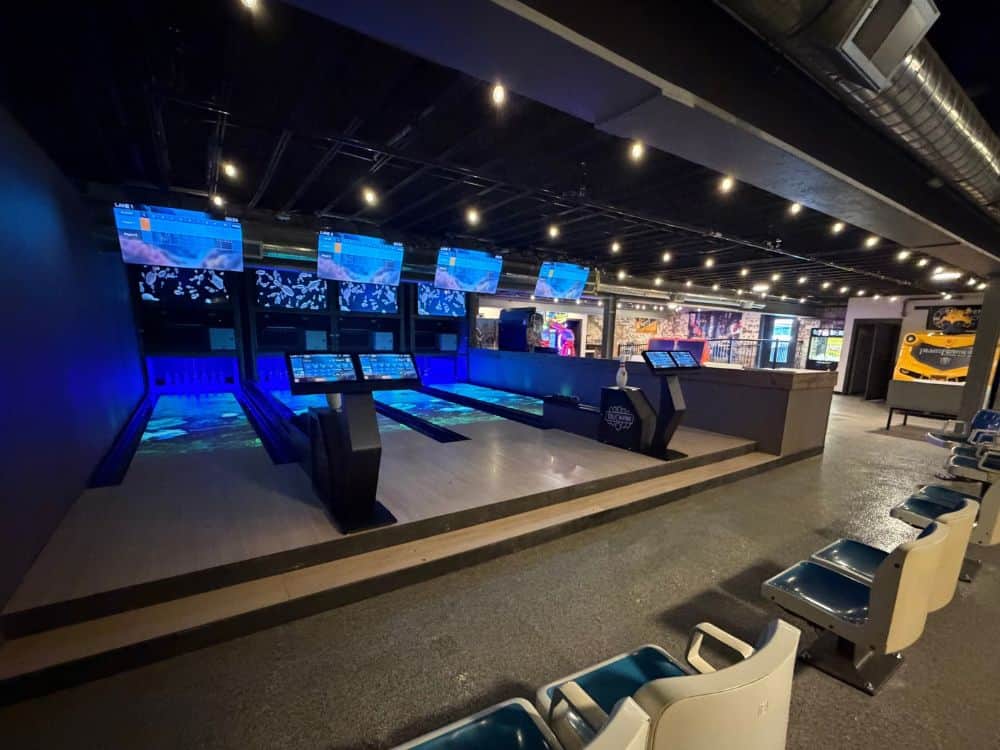
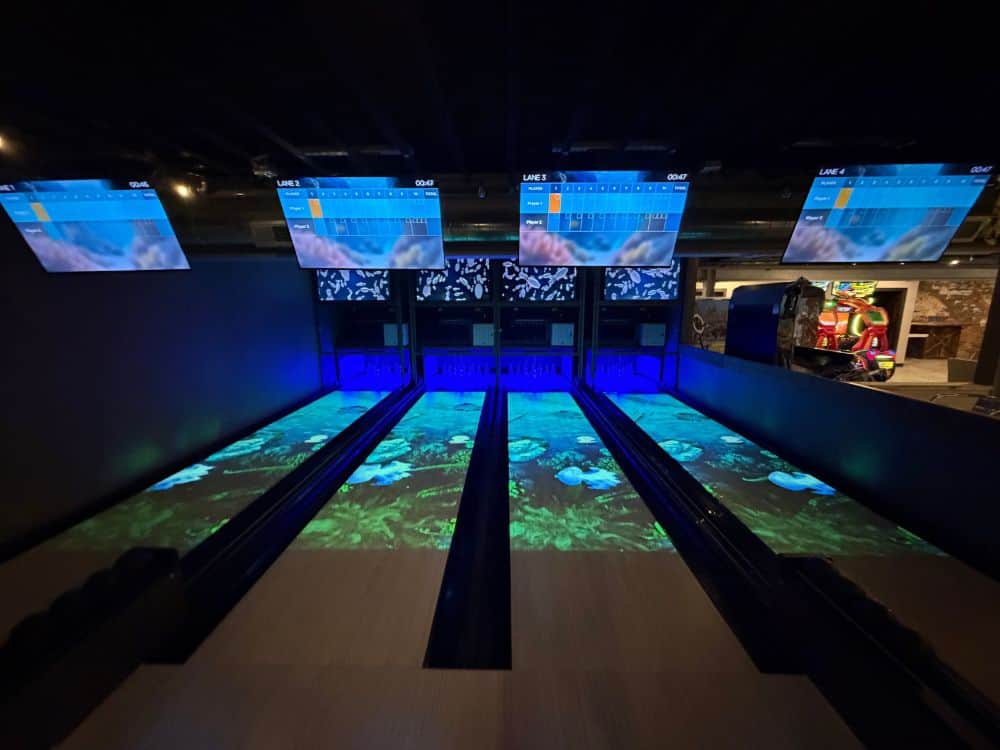
The projected content puts graphics and interactive game elements directly on the lane surface, extending the visual experience beyond the scoring monitors overhead. At Midtown Market, the bowling area is darker than much of the surrounding market, with blue lighting, touchscreen consoles, overhead scoring displays, and projected visuals stretching down the lanes. It feels connected to the arcade nearby while still functioning as bowling.
Nexus also gives guests different ways to play, which works well for a venue serving kids, families, casual adult groups, and more experienced bowlers. Funk has used a similar combination of social entertainment bowling (i.e. arcade bowling, duckpin lanes, and on-lane projection) at Bowls & Blasters, where six duckpin lanes were added to an existing entertainment mix.
Making Six Lanes Work Inside 30,000 Square Feet
Midtown Market shows how bowling can be planned as an integrated part of a larger entertainment space.
Even before Midtown Market opened, local tourism coverage described plans for an arcade featuring duckpin bowling alongside food and an indoor playground.
The property has 30,000 square feet to work with, but that space has to support much more than six bowling lanes. Food service, seating, an arcade, play areas, events, and circulation all compete for room.
Duckpin’s smaller footprint helps preserve space for those other uses.
The finished layout also gives the bowling area its own identity. Seating sits close enough for groups to watch and socialize, while the rest of Midtown Market remains only a few steps away.
For an operator planning a family entertainment center, that’s often the more useful question to ask: not simply how many lanes will fit, but how bowling will function alongside everything else the business needs to offer.
Giving Guests More Reasons to Stay
The strongest part of a multi-use venue is the way one activity can lead naturally into another.
Someone who came for lunch may notice the bowling lanes and decide to play. Kids who started in the arcade can move over to duckpin. A group can bowl and still have somewhere to sit, eat, and keep talking afterward.
That is where arcade bowling earns its space.
At Midtown Market, the six lanes aren’t isolated from the rest of the experience. They’re part of the same visit.
For Funk, projects like this are a good reminder that bowling doesn’t need an entire building to make sense. With the right layout, equipment, and scoring technology, it can become one piece of a much broader entertainment concept.

0 Comments